Natitingou is the gateway to northern Benin’s highland world a compact, friendly city surrounded by the dramatic Atacora mountain range, traditional Betamaribe villages, and one of the finest ethnographic museums in West Africa. This 3-day tour takes you well beyond the tourist trail into a Benin that feels genuinely undiscovered.
Hotel Pickup & Drop off
3 Hours Before Flight Time
All our guides are certified professionals with deep local knowledge — not freelancers. Accommodation is pre-inspected and matches the category described. Pace is designed to balance full experiences with adequate rest. All logistics, permits, and entry fees are handled in advance so you experience Benin, not paperwork.
Getting Here: Fly to Cotonou-Cadjèhoun Airport (COO) — direct from Paris CDG (Air France, daily, 6h20). Visa available online at evisa.gouv.bj — USD 50, 48-72h processing. Yellow Fever vaccination required. We provide a full pre-departure travel pack upon booking.
Currency: West African CFA Franc (XOF) — fixed to EUR at 655.96. ATMs available in Cotonou, Parakou, and Natitingou. Cash preferred outside main cities.
Climate: Best Nov–Mar (dry season). Warm days 28–34°C. Light, breathable fabrics recommended. Light rain jacket for shoulder months.
Safety: Benin is one of West Africa’s most stable countries for tourism. Standard travel precautions apply. Your guide has emergency contacts and first-aid certification.
Early departure from Cotonou or domestic flight arrival. Settle in. Late afternoon: first orientation walk through Natitingou city market. Dinner at a local restaurant.
Morning: Natitingou Museum of the Atacora — masks, musical instruments, architectural models, and extensive Betamaribe cultural exhibits. Afternoon: drive into the hills to Koussoukoanou or Boukoumbé villages — tata-somba fortresses at their most impressive. Elder meeting and cooking demonstration.
Scenic highland morning drive with birding stops. Visit to an iron-working artisan village. Return south via Dassa-Zoumé (optional extension) or proceed to Cotonou.


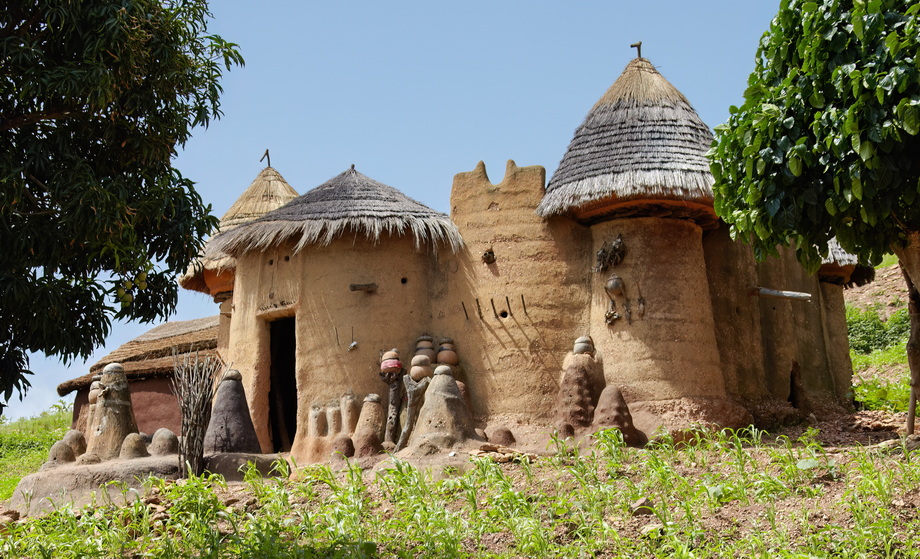


“The elder meeting in the village was extraordinary. This man’s family has lived in the same tata-somba for 400 years. He showed us the original construction materials. Unforgettable.”
Wei L.
Shanghai, China — March 2025

“The museum is world-class. The masks and ceremonial objects collection rivals major European ethnographic museums — but here everything has living context around it.”
Prof. C. Dumont
Bordeaux, France — February 2025

The tata-somba villages are unlike anything I have seen in my life. Thousand-year-old castle architecture still lived in today. Completely mind-blowing.”
Pieter V.
Rotterdam, Netherlands — November 2024