Ganvié: Africa’s Venice on Water

Ganvié: Africa's Venice on Water

What to Expect When You Visit

A living city of 30,000 souls built entirely on stilts above a West African lake — Ganvié is one of the most extraordinary human settlements on Earth and a highlight of any Benin Republic visit. 

“There is a city in Benin Republic where the streets are made of water, where children paddle to school, where the market floats and the evening light turns the lake gold — and most of the world has never heard of it.” — Ganvié is that city. And visiting it is one of the most profoundly memorable experiences in West Africa.

Ganvie, the Venice of Africa
Ganvie the Venice of Africa

What Is Ganvié? The Story Behind the Stilt Village

Ganvié — pronounced “Gahn-vee-ay” — is a lacustrine village (lake village) on Lake Nokoué, 20km north of Cotonou. With an estimated population of 30,000–40,000 people, it is the largest stilt village in Africa and one of the largest in the world. Every structure, homes, schools, churches, the market, the hotel, is built on wooden stilts rising from the shallow brackish waters of the lake.

The village was founded in the 17th century by the Tofinu people (a Fon subgroup), who fled the slave-raiding expeditions of the Fon Kingdom of Dahomey. The Fon warriors were bound by a spiritual prohibition against crossing water, making the lake an impenetrable natural fortress. The Tofinu realised that safety lay not on any shore, but on the water itself. They built their village on stilts and called it Ganvié — meaning “we are safe” or “we are saved” in Fon.

Centuries later, the Tofinu remain. Ganvié is not a tourist attraction built for visitors it is a real, living community where daily life happens exactly as it has for generations, simply adapted to a life on water. Understanding this is essential to experiencing Ganvié with the respect and appreciation it deserves.

How to Get to Ganvié Step by Step

Step 1: Cotonou to Abomey-Calavi

Take a shared taxi (bush taxi) or private car from Cotonou to Abomey-Calavi. The embarkation point is on the north shore of Lake Nokoué.

⏱ 30–45 min · 💰 €1–3 (shared) or €8–12 (private) · 📍 20km north of Cotonou

Step 2: Hire a Pirogue (Dugout Canoe)

At the embarkation point, hire a pirogue and guide. Official rates are posted. Negotiate clearly before departing. A guide is mandatory and invaluable — Ganvié’s stories require telling.

⏱ 30 min on water · 💰 €8–15 per person · ℹ️ Negotiate everything before boarding

Step 3: Arrive in Ganvié

The pirogue crosses the open lake to Ganvié. Early morning crossings offer spectacular light and a calm lake surface. The village appears gradually — first its masts and rooftops above the water, then the extraordinary reality of a city on stilts.

🎒 Best time: 7–9am · 📷 Bring camera ready for the approach

Step 4: Tour the Village

Your guide navigates the canoe through Ganvié’s water-streets, past homes, the market, the school, the community centre, and the church. You can stop to observe, photograph (respectfully), and speak with residents.

⏱ 1.5–2.5 hours touring · 🛒 Floating vendors may approach — bring small cash

💡 Pro Tip: Book your Ganvié visit as part of a guided half-day tour from Cotonou through Visit Benin Republic. We handle transport, a licensed bilingual guide, and pirogue hire — and include a stop at the nearby floating market for the full experience.

What to See & Experience in Ganvié

The Floating Market

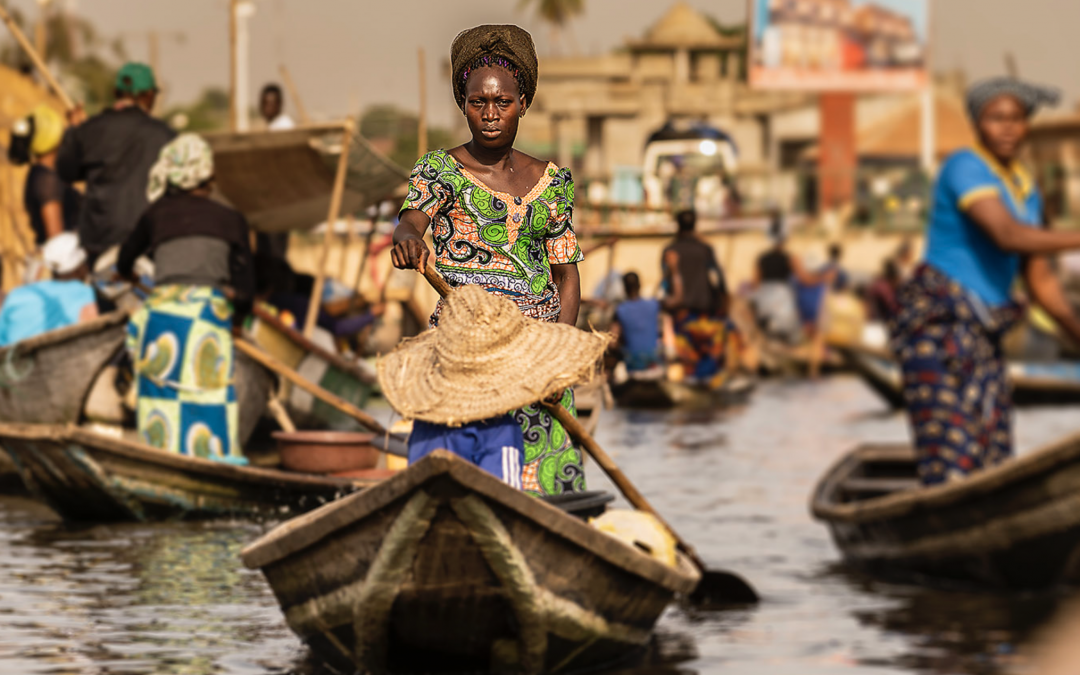
Every morning, canoe-vendors converge in the open water of Ganvié for the floating market. Women in pirogues sell fish, vegetables, salt, palm oil, and household goods directly from their boats. It’s bustling, colourful, and extraordinary — the social and commercial heart of village life.

The Stilt Architecture

Every home in Ganvié stands on wooden or bamboo stilts driven into the lake bed. The construction techniques, passed down for centuries, have evolved to accommodate modern materials — metal roofs and concrete posts alongside traditional bamboo. The architectural variety and density is genuinely fascinating.

The Church & School

Ganvié’s Catholic church sits on the water like all other structures — a remarkable sight, with its whitewashed walls and corrugated iron roof rising above the lake. The local school sees children arrive and depart by pirogue, a sight of completely normalised aquatic life.

The Fishing Acadjas

Ganvié developed an ingenious system of fish farming — acadja — in which brushwood is planted in the lake to attract fish, which are then harvested. These submerged forest gardens are visible throughout the lake around the village, and a guide can explain the sophisticated ecology of this traditional aquaculture.

Sunset from Hôtel du Lac

The Hôtel du Lac — a floating hotel in the middle of the village — offers overnight stays and a spectacular lake restaurant. Watching the sun set over Lake Nokoué from this vantage, surrounded by the silhouettes of Ganvié’s stilt houses, is one of Benin’s most memorable experiences.

Birdwatching on the Lake

Lake Nokoué is a significant wetland bird habitat. Early morning pirogue tours offer sightings of great white pelicans, African darters, various egrets and herons, kingfishers, and migratory waterbirds. Bring binoculars for the best experience.

Photography Guide for Ganvié

1 Go early. The 7–9am window gives the best light — golden, warm, low-angle — perfect for the reflective lake surface and the activity of the morning market. Afternoon light is harsh and flat.
 
2 Stabilise your shots. A moving pirogue creates blur. Brace your elbows against your knees for sharper images, or use burst mode. A small tripod is impractical here.
 
3 Always ask before photographing people. A smile, a gesture, and a nod go a long way. Some residents appreciate small tips in return for posed portraits. Never photograph people who decline.
 
4 Protect your gear. Lake spray and humidity can damage cameras. A waterproof bag or dry pouch is essential. Secure your phone with a lanyard.
 
5 Shoot wide for context. Ganvié’s power is its scale — the village extending in every direction over the water. Use wide-angle shots to capture the extraordinary density of life on the lake.

What to Bring to Ganvié

Sunscreen & Hat

The open lake offers zero shade for 30+ minutes. Sun protection is non-negotiable.

Insect Repellent

Lake Nokoué has mosquitoes, especially morning and evening. DEET-based repellent recommended.

Bottled Water

Bring at least 1.5 litres. The heat and open boat make dehydration a real risk.

Small Cash

For guide tip, floating vendor purchases, and optional Hôtel du Lac refreshments. CFA francs essential.

Camera / Phone

In a waterproof case or dry bag. The entire visit is extraordinarily photogenic.

Light Clothing

Breathable cotton or linen. Modest dress is respectful — shorts and T-shirts are fine.

Responsible Tourism at Ganvié

Ganvié is a living community, not a theme park. Please be a respectful visitor:

  • Always ask permission before photographing residents, especially children
  • Do not throw anything into the lake — it is the community’s water source and ecosystem
  • Purchase directly from floating vendors when buying — this supports local livelihoods
  • Follow your guide’s instructions about where to go and what areas to avoid
  • Do not enter homes or private spaces unless explicitly invited
  • Leave Ganvié as you found it — take all rubbish back with you

Frequently Asked Questions About Ganvié

How do I get to Ganvié?

Take a shared taxi or private car from Cotonou to Abomey-Calavi (20km, ~30 min). From the embarkation point, hire a pirogue for the 30-minute boat journey across Lake Nokoué to Ganvié village.

How long does a visit to Ganvié take?

A standard pirogue tour takes 2–3 hours. With travel from Cotonou, expect a half-day excursion. For a more immersive experience, overnight stays are available at Hôtel du Lac in the village.

What is the best time to visit Ganvié?

Early morning (7–9am) is ideal — the floating market is most active, the light is beautiful for photography, and temperatures are comfortable before midday heat.

Can you swim in Lake Nokoué at Ganvié?

Swimming is not recommended due to bilharzia (schistosomiasis) risk in the shallow lake waters. Enjoy the lake entirely from your pirogue.

Is Ganvié appropriate for children?

Yes — an excellent family experience. The pirogue ride is calm, and the village’s extraordinary way of life is fascinating for young visitors. Ensure children wear life jackets (provided by reputable operators).

What should I bring to Ganvié?

Sunscreen, hat, sunglasses, insect repellent, bottled water, camera in waterproof case, and cash for guide tips and floating market purchases.

Leave a Reply

Why Book With Us?

  • No-hassle best price guarantee
  • Customer care available 24/7
  • Hand-picked Tours & Activities
  • We put you first

Restaurants & Bars

Tourists are asking “where should we eat?” Make sure VBR is pointing them to you.

+229 01 56407067

[email protected]

Hotels & Apartments

Empty rooms don’t pay rent. Get discovered by inbound tourists, diaspora visitors, and business travelers through VBR’s growing platform..

+358408091764

[email protected]

Service Providers

Every great trip needs great local support. List your services with VBR and get found.

+358 408091764

[email protected]

Car Rentals

Every traveler needs a ride. Make sure it’s yours. List your fleet on Visit Benin Republic..

+358 408091764

[email protected]

Business

Be part of Benin’s next chapter. List, partner, or invest with Visit Benin Republic.

+358 408091764

[email protected]

GDPR

    Proceed Booking